Location:
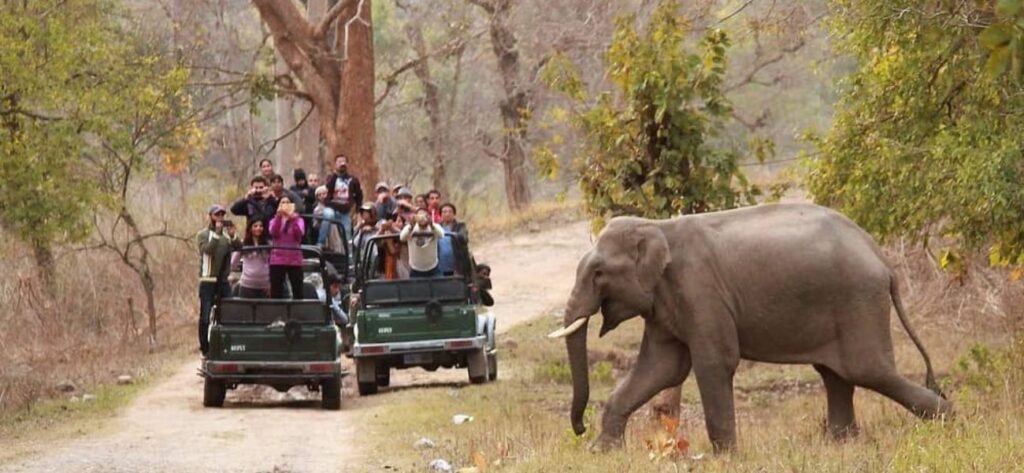
Rajaji National Park is located in Uttarakhand, spread across Haridwar, Rishikesh, and Dehradun districts. It is known for its rich wildlife, scenic beauty, and lush forests.
🌿 About Rajaji National Park:
- Famous for elephants, tigers, leopards, deer, sloth bears, and over 300 species of birds.
- Established in 1983 by merging three wildlife sanctuaries: Rajaji, Motichur, and Chilla.
- Covers around 820 sq. km.
- Ideal for safaris, bird watching, nature walks, and photography.
🕰️ Best Time to Visit:
- November to June — Park remains closed during monsoon (July to mid-November) due to heavy rainfall.
- Peak Wildlife Sightings: March to June (summer) is ideal for spotting animals near water sources.
- Bird Watching: Winter months (December to February) are perfect for bird enthusiasts.
🚙 Safari Details:
- Types of Safaris: Jeep Safaris (most common), available in both Morning & Evening slots.
- Popular Entry Gates:
- Chilla Range Gate (Near Haridwar) – Most preferred.
- Mohand Range Gate (Near Dehradun).
- Motichur Range Gate (Near Haridwar).
Safari Timings (approximate):
| Time of Year | Morning Safari | Evening Safari |
|---|---|---|
| Nov to June | 6:00 AM – 9:00 AM | 2:30 PM – 5:30 PM |
Timings may vary slightly; it’s advisable to confirm locally.
🗓️ Suggested 1-Day Itinerary for Rajaji National Park:
Morning:
- Arrive at your pre-booked hotel/resort near Chilla Gate or Haridwar/Rishikesh.
- Freshen up and have an early breakfast.
- 6:00 AM – 9:00 AM: Enjoy an exciting Jeep Safari inside the park.
- Look out for elephants, deer, leopards, birds, and if lucky, a tiger!
- Return to hotel, rest or explore nearby areas.
Afternoon:
- Lunch at the resort or a nearby restaurant.
- Optional visit to nearby temples (e.g., Chandi Devi, Mansa Devi) if staying near Haridwar.
Evening:
- 2:30 PM – 5:30 PM: Evening Jeep Safari (optional, but recommended for more sightings).
- Relax at your resort, enjoy the peaceful natural surroundings.
💡 Tips:
- Book safaris in advance, especially during peak seasons.
- Carry binoculars and a good camera for wildlife and bird photography.
- Wear neutral-colored clothes (avoid bright colors).
- Follow forest guidelines strictly; avoid littering or making noise.
- Always carry water, sunscreen, and a hat.
